
Auxetic Surgical System
A geometry-based surgical platform for controlled tunical expansion, restoring penile length, girth and volume simultaneously – without grafting.
Clinically supported by translational research and published clinical case series in Peyronie’s disease.

Key features
-
Controlled 3D tunical expansion without grafts
Auxetic geometry enables bidirectional expansion of the tunica albuginea, allowing simultaneous correction of curvature, hourglass defects, and volumetric loss—without the need for grafting.
-
Restoration of length, girth, and penile volume
Unlike conventional techniques, the auxetic approach delivers global dimensional recovery, addressing the primary causes of patient dissatisfaction in Peyronie’s disease.
-
Effective correction of complex and multiplanar deformities
Designed to treat uniplanar and multiplanar curvatures, hourglass deformities, and advanced corporal fibrosis with predictable anatomical outcomes.
-
Reduced operative time and lower infection risk
Eliminates graft preparation and sizing, simplifying the procedure and reducing surgical time—an essential advantage in prosthetic surgery.
-
Standardized, reproducible incision geometry
The system precisely controls incision length, spacing, and alignment, ensuring consistent auxetic behavior and minimizing intraoperative variability.
-
Precision cutting with dedicated electrosurgical tip
Optimized for clean, controlled tunical incisions while minimizing thermal injury and tissue carbonization.
-
Scalable and surgeon-independent technique
Transforms a complex biomechanical concept into a reproducible surgical solution, reducing dependence on individual technical variability.
Partnership
View Manufacturing & Distribution Partners

Auxetic Surgical System
Clinical Indications
The Auxetic Surgical System is indicated for patients with Peyronie’s disease undergoing penile prosthesis implantation who present with:
-
Significant loss of penile length, girth, or overall volume
-
Residual curvature after prosthesis placement and manual modeling
-
Hourglass deformities or localized volumetric defects
-
Multiplanar penile curvature
-
Advanced corporal fibrosis, where grafting would increase operative time and infection risk
The system is particularly suited for cases in which the surgical goal extends beyond axial straightening and requires global anatomical restoration with preservation of penile biomechanics.
Auxetic Technique vs Grafting
Traditional grafting techniques were designed to address localized tunical defects. While effective for focal correction, grafting:
-
Acts locally, without restoring global penile girth or volume
-
Increases operative time, a critical factor in prosthesis-related infection risk
-
Requires graft preparation, sizing, and fixation
-
Frequently results in palpable fibrosis
-
Often necessitates additional plication to address multiplanar curvature
In contrast, the Auxetic Surgical System:
-
Eliminates the need for heterologous grafts
-
Promotes bidirectional (length and girth) tunical expansion
-
Corrects uniplanar and multiplanar deformities simultaneously
-
Reduces surgical time and procedural complexity
-
Improves axial rigidity by increasing penile girth
-
Delivers global volumetric restoration, not achievable with grafting techniques
Rather than compensating for tissue loss, the auxetic approach reorganizes the tunica albuginea itself, enabling predictable expansion and anatomical recovery in complex Peyronie’s cases.
For surgeons seeking efficiency, reproducibility, and superior functional outcomes, the Auxetic Surgical System represents a paradigm shift beyond graft-based reconstruction.

Auxetic vs Grafting — Key Differences
-
No graft required — avoids heterologous material and graft-related fibrosis
-
Shorter operative time — less exposure and lower prosthesis infection risk
-
Global volumetric restoration — length and girth expansion, not only defect coverage
-
Handles complex deformities — multiplanar curvature and hourglass in one workflow
-
Standardized and reproducible — consistent geometry and predictable expansion
A New Concept in Peyronie’s Disease Surgery
The Auxetic Surgical System introduces a novel surgical concept for penile reconstruction:
controlled auxetic incisions that enable simultaneous length and girth restoration, particularly useful during penile prosthesis implantation in complex cases.
This approach aims to:
-
Correct penile curvature and deformities
-
Restore corporal volume
-
Reduce dependence on graft-based techniques
Why Auxetic Geometry Matters
Auxetic structures expand both longitudinally and transversely when tension is applied.
When translated into surgery, this concept allows the tunica albuginea to expand in a predictable and symmetrical manner, addressing deformity while minimizing focal stress points.
Key advantages include:
-
Three-dimensional tunical expansion
-
Improved anatomical symmetry
-
Controlled correction of complex deformities
Designed for Precision and Reproducibility
The Auxetic Surgical System is designed to:
-
Standardize complex incisions
-
Reduce surgeon-dependent variability
-
Improve intraoperative control and consistency
By transforming a conceptually complex maneuver into a structured and repeatable process, the system supports safer adoption of advanced reconstructive techniques.
Clinical Applications
The Auxetic Surgical approach may be applied in:
-
Peyronie’s disease with severe curvature
-
Penile shortening and volume loss
-
Hourglass and complex deformities
-
Penile prosthesis implantation with associated fibrosis
Scientific Background
Peyronie’s disease is characterized by fibrotic remodeling of the tunica albuginea, leading to curvature, shortening, and deformity. Surgical strategies that enable controlled tissue expansion without extensive grafting represent an important evolution in reconstructive urology.
Peer-reviewed biomechanical and clinical studies on tunical expansion techniques and auxetic principles support the rationale behind this approach.
What Is the Auxetic Surgical System?
The Auxetic Surgical System is a dedicated surgical platform developed to support controlled tunical expansion during penile reconstructive procedures, particularly in cases involving complex deformities, fibrosis, and Peyronie’s disease, often in association with penile prosthesis implantation.
The system is based on the application of auxetic geometry principles to the tunica albuginea, enabling predictable three-dimensional tissue expansion while preserving structural integrity. By standardizing complex incisions, the Auxetic Surgical System aims to improve precision, reproducibility, and intraoperative control in advanced penile reconstruction.
Auxetic Stencil
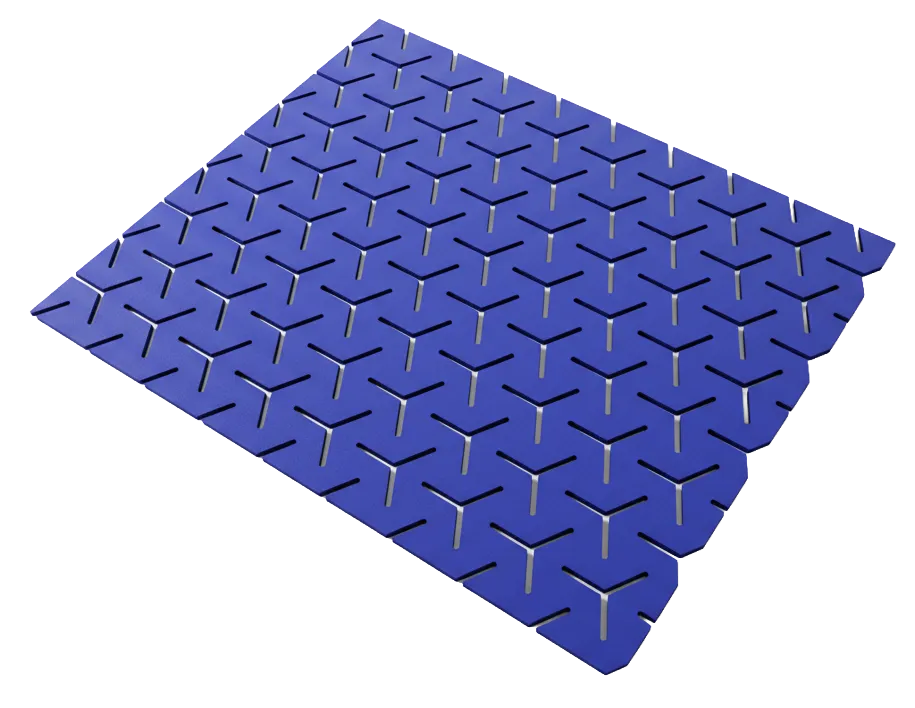
The Auxetic Stencil is a sterile, single-use surgical guide designed to assist the surgeon in performing precisely distributed auxetic incisions on the tunica albuginea.
By providing a predefined geometric pattern, the stencil helps translate a complex surgical concept into a structured and reproducible technique, reducing variability while maintaining full surgical flexibility. Its design supports symmetrical incision distribution, which is essential for achieving controlled and uniform tissue expansion.
Auxetic Tip
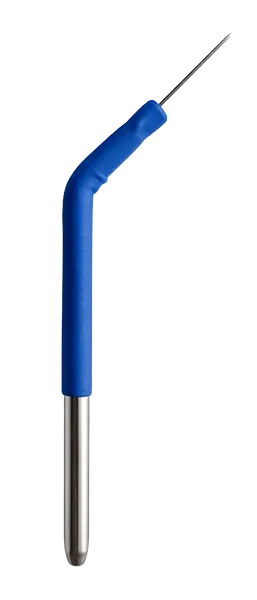
The Auxetic Tip is a dedicated electrosurgical accessory developed to complement the Auxetic Stencil. Its geometry allows for precise, consistent, and controlled incisions when used with standard electrosurgical pencil systems.
The tip is designed to optimize incision accuracy, minimize unintended tissue trauma, and enhance intraoperative control, supporting the safe execution of auxetic incision patterns during reconstructive penile surgery.
Manufacturing & Distribution Partners
The Auxetic Surgical System is manufactured and distributed through authorized medical device partners, in accordance with local regulatory requirements and healthcare standards.
Availability may vary by country or region. Surgeons and healthcare institutions are encouraged to contact the appropriate manufacturing or distribution partner listed below for product information, regulatory status, and purchasing details.
Scientific & Clinical Rationale
Penile deformities associated with Peyronie’s disease and corporal fibrosis result primarily from non-uniform remodeling of the tunica albuginea, leading to curvature, shortening, loss of girth, and altered biomechanical behavior during erection.
From a biomechanical perspective, traditional reconstructive strategies rely on length-reducing plication techniques or length-restoring graft-based procedures, each associated with specific limitations related to predictability, tissue integration, and structural stress distribution.
The Auxetic Surgical System is grounded in the application of auxetic geometry principles, in which specifically arranged incision patterns enable tissue structures to expand simultaneously in longitudinal and transverse directions. When applied to the tunica albuginea, this concept supports controlled three-dimensional expansion, promoting deformity correction while preserving tissue continuity.
By standardizing the geometry and distribution of tunical incisions, the Auxetic Surgical System aims to reduce focal stress concentration, improve symmetry, and enhance intraoperative control during complex penile reconstructive procedures, particularly in cases performed in conjunction with penile prosthesis implantation.
Scientific Publication
The scientific and clinical concepts underlying the Auxetic Surgical System are supported by peer-reviewed publications exploring the biomechanical and clinical application of auxetic incision patterns in penile reconstruction:
Auxetic Expansion of the Tunica Albuginea for Penile Length and Girth Restoration Without a Graft: A Translational Study
Sexual Medicine. 2021
https://doi.org/10.1016/j.esxm.2021.100456

Request Information
For additional information regarding availability, regulatory status, manufacturing partnerships, or clinical application of the Auxetic Surgical System, please submit your inquiry using the form below.
WhatsApp: +5521999260236
Brazil
Working Hours
Monday-Friday 8am-5pm.